Believe it or not, batteries are safer than ever.
Battery storage got some bad press last year after the Moss Landing battery fire. But what didn't get much attention was the decade of safety improvements that made that type of fire a thing of the past, and how batteries are quietly revolutionizing energy economics for homes, businesses, and the entire grid.
Battery safety 101
The whole point of a lithium battery is to hold a lot of energy in a small space. If one of the many cells that make up that battery is damaged, defective, overcharged, or pushed past its temperature limits, it can start a reaction that produces heat faster than it can be dissipated. The process is called thermal runaway, where the failed cell vents hot flammable gas that causes adjacent cells to heat and fail, which can cause a chain reaction throughout the entire battery. This is essentially the iconic moment that everybody is familiar with when they think about a battery fire. But what is the realistic solution? Do we just accept that there will be a certain amount of battery fires a year, knowing that it is still less than conventional fuel related fires? Or, do we engineer our way out of it? The solution really comes down to better chemistries (and different chemistries for different applications), what containers the batteries go into, and then the code in each jurisdiction around fire safety.
Let's get one thing out of the way in the beginning. This is fundamentally new technology. In terms of history, it has been a lot safer than other innovations. That being said, the goal is always to make a solution that is as safe and scalable as possible and, if an accident does happen, damage to humanity, nature, and infrastructure is minimized.
Battery chemistry is one of the most exciting spaces to be at the moment.
The batteries that have made the worst headlines used nickel manganese cobalt (NMC) cathodes, a high energy-density chemistry developed for electric vehicles where energy per pound is the number one priority. In the early days, this was the only option available and, for the early adopters of both vehicles and buildings, it carried a certain level of risk.
This is where innovation began to take over. Due to the nature of buildings versus vehicles, weight didn't necessarily matter. Stationary storage sits on a concrete pad and never has to move, so it can afford to be bigger and heavier. That freedom is what let the industry shift to lithium iron phosphate (LFP) chemistry.
The big difference in safety between these two chemistries is thermal stability. An NMC cell begins breaking down and releasing flammable gases at temperatures where an LFP cell is still happily humming along. The release of those gases is what turns a single overheated cell into a runaway chain reaction. LFP trades some of that energy density for a much wider margin of thermal safety, and also does away with the toxic heavy metals of NMC batteries. The unfortunate part is that the majority of the market merely sees “battery” and “fire,” assuming that they are all the same.
In 2021, Tesla switched their Megapack product to LFP chemistry and it quickly became the preferred solution across the entire industry. But that doesn't mean the innovation has stopped. While LFP is the safest and incredibly efficient, there is a lot of research going into different types of batteries (for another article) including salt based batteries and even hydrogen. But when looking at the decision of whether or not a battery in 2026 is safe, it most certainly is compared to NMC batteries.
How a battery is stored is arguably more important than the chemistry.
Chemistry is a big part of the safety story of batteries. Another key part is how the cells are arranged in their container and how and where the container is installed at a site. This is where the January 2025 fire at Moss Landing was a remarkably poor example of deploying battery technology at a commercial scale.
That facility packed NMC racks into a repurposed 1950s turbine hall, directly under a leaky sprinkler system that had been implicated in three past battery fires. This was a design that was inherently flawed and essentially unique in the world of battery installations, and no modern project replicates it. The slow but steady dripping of water from the sprinkler system onto high-voltage electrical equipment guaranteed eventual failure, and having it installed inside an old building meant that the fire had plenty of fuel to burn once it got started. It's actually incredible that it didn't happen sooner, oddly enough.
Despite the decisions that led to the fire, and the unfortunate event, the fire caused no deaths or injuries, minimal property loss, and minor disruption to daily life for nearby residents. The biggest impact, which is fairly obvious, is the long-term environmental impacts of the nickel, manganese, and cobalt nanoparticles that were released into the nearby Monterey Bay. While the short-term effects have been minimal, time will tell.
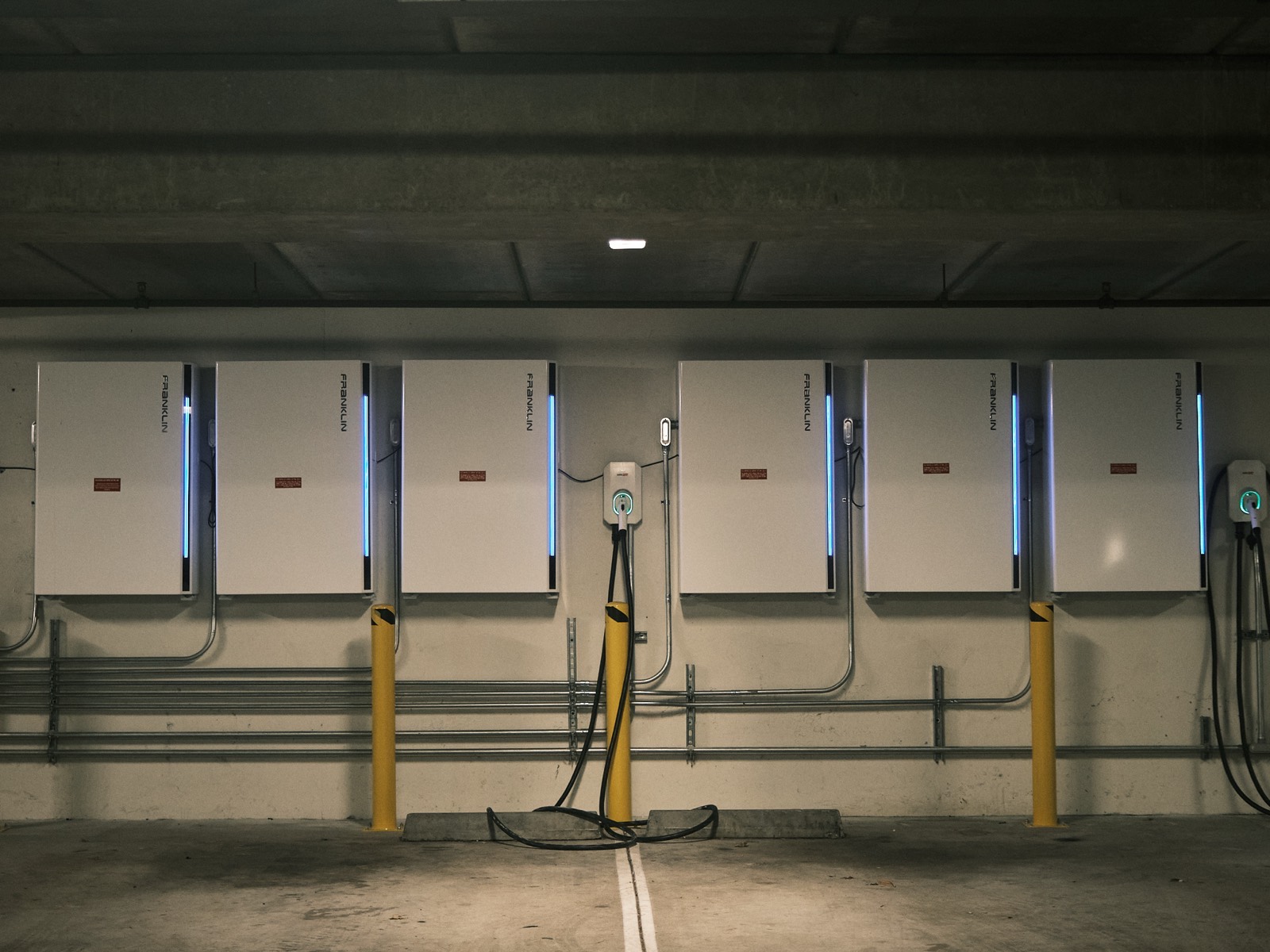
Modern commercial storage arrives as sealed outdoor modular enclosures, each with its own detection, its own suppression, its own deflagration venting, spaced apart from its neighbours by code-specified distances. This redesign got tested in the most direct way available in 2022, when a fire broke out at a Tesla-based project, next door to Moss Landing, and it never left the container it started in.
The engineering that matters is not preventing every cell failure. It is guaranteeing the failure ends where it started.
How code has kept up, or not, with battery technology
Large battery storage went from a technology the fire code barely mentioned to one of the most prescriptively governed things you can install on a commercial property. But there is still a lot of room for improvement as technology and safety continues to advance.
UL 9540AA testing method, not an official rating. It forces a manufacturer to demonstrate what actually happens at cell, module and unit level during thermal runaway, and the results are what an authority having jurisdiction reads when deciding your layout.
NFPA 855The standard for stationary storage installation: separation distances, enclosure limits, ventilation, explosion control, and the hazard mitigation analysis a project has to produce. Revised 2023.
CPUC General Order 167-CCalifornia adds its own fire safety, maintenance, and operating standards for storage facilities on top of the national code, adopted in the wake of the Moss Landing fire.
Local fire marshalsLocal fire marshal review is now required to install. Expect questions about emergency response planning, apparatus access, water supply, and setbacks before a permit is issued.
Batteries have been proven to be safe
Over the course of the growth of the industry, data on battery failures became a way to measure innovation and for code to use as reference when creating the rules. EPRI maintains the most comprehensive public database of storage failures, and the trends they found show the rapid innovation and the increase in safety across batteries. While small, unreported battery fires aren't accounted for, anything that was reported is included in their data.
It really isn't an if, but a when you should install a battery at your site.
The practical list of key questions is short.
- Ask what chemistry is in the cells, and ensure that the answer is LFP.
- Ask whether the product has been through UL 9540A testing and ask to see the report rather than the certificate.
- Ask how the units are spaced and what the hazard mitigation analysis concluded.
- Ask when the fire marshal gets involved, and treat any answer other than early as a warning.
And remember, a vendor who finds these questions annoying or unnecessary is really telling you to choose a different vendor.
Battery has become one of the biggest advantages companies can have when it comes to stabilizing energy costs and, potentially, adding another stream of revenue. Prices have fallen 55 percent in just the last three years alone. While the prices of battery storage will probably continue to fall, it is also working against the steadily increasing rate of utility costs. We believe the crossover point is here. So the longer the timeline, the more savings, stability, and revenue stays inside the company.
Sources: SEIA Energy Storage Market Outlook Q3 2026 EPRI BESS Failure Incident Database NFPA 855 UL 9540A CPUC General Order 167-C BloombergNEF